A failing bay door does not just slow operations. It bleeds money every hour it stays stuck. From warehouses in Otay Mesa to body shops in Kearny Mesa, San Diego business owners want a fast, code-compliant install that holds up under heavy daily traffic. This guide walks you through what to expect from a commercial garage door installation project and how to choose the right contractor for your property.
Why Businesses in San Diego Cannot Afford Door Downtime
A standard commercial door cycles 20 to 50 times a day, while high-volume warehouses can push past 200 cycles. Loading docks and oversized bays can leak a large share of conditioned air when the weather seal fails, which hits your power bill, HVAC equipment, and product quality on temperature-sensitive goods. According to OSHA standard 1910.179, overhead doors at material handling areas also fall under federal workplace safety rules, so a stuck or off-track door is not just a hassle but a liability.
When a commercial door breaks, you face halted shipments, frustrated drivers, higher cooling costs, theft risk after dark, and OSHA exposure if the auto-reverse stops working. A planned commercial garage door installation removes those headaches before they hit your bottom line.
Types of Commercial Garage Doors for San Diego Properties
Different businesses need different builds. A body shop bay is not the same as a fire station entrance or a self-storage unit. We match the door to the cycle count, security needs, and visual style of the property.
Common Commercial Door Builds
- Rolling steel doors: Heavy-gauge slats that coil above the opening. Top pick for warehouses, loading docks, and self-storage.
- Sectional overhead doors: Horizontal panels with insulation options. Common in auto shops, service garages, and fleet yards.
- High-speed doors: Open at 60+ inches per second. Cuts air loss and keeps forklift traffic moving in cold storage and food plants.
- Fire-rated doors: Required at openings in fire-rated walls. Close on a heat or smoke signal to meet UL 10B and NFPA 80.
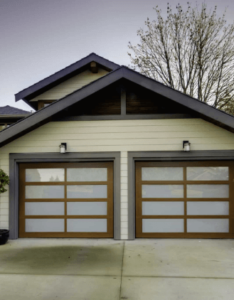
- Full-view aluminum glass doors: Bright option for car dealers, breweries, and restaurants with patio bays.
- Counter shutters: Small roll-up doors for concession stands, pharmacies, and indoor service counters.
Industries That Lean on a Heavy-Duty Setup
A door spec for a flower shop will not hold up on a freight dock. Commercial work covers warehouses and distribution centers, auto repair shops and dealerships, restaurants and breweries, fire and emergency stations, self-storage facilities, fleet maintenance yards, and industrial manufacturing units. Each setting gets a door cycle rating, opener size, and spring system matched to the daily workload.
How the Commercial Installation Process Works
A commercial install is bigger and more involved than a home swap. Lift heights are taller, panels weigh more, and many openers need three-phase power.
Step by Step Project Flow
- Site visit and rough opening measurements.
- Door pick based on cycle rating, insulation R-value, and security need.
- Permit pull with the City of San Diego or the local jurisdiction.
- Removal of the old door, tracks, springs, and opener.
- Wall opening prep, jamb repair, and weather-seal check.
- New door panels, hardware, and tracks bolted in line.
- Heavy-duty opener wired by a licensed electrician when needed.
- Safety sensor and auto-reverse test against a soft target.
- Final inspection and operator training for your staff.
Plan for one to two days on a single bay and three to five days on multi-bay sites. Many businesses book work after hours or on weekends when shutdowns hurt revenue.
Cost Factors for Commercial Garage Door Installation
Commercial pricing has a much wider range than residential work. A basic 10×10 rolling steel door starts around $2,500 to $4,500 installed. A 14×16 insulated sectional door with a heavy-duty opener can run $6,500 to $12,000. Fire-rated and high-speed doors sit at the higher end, often $10,000 to $25,000 per opening.
Cost is shaped by door size and material gauge, insulation rating and wind load class, opener horsepower and drive type, vision panels and pass doors, smart access controls, permit fees, and electrical upgrades on older buildings. Ask for a written line-item quote so you can compare brands, gauges, and warranty terms head to head.
Code Compliance and Safety Standards
San Diego business owners must meet several layers of code: California Building Code Title 24 for energy and structural rules, ASTM and ANSI standards for door operation and labeling, OSHA 1910.179 for overhead and material handling safety, NFPA 80 for fire door inspection records, and ADA clearances at public entry points. A trained contractor pulls the right permit, files the inspection, and hands over paperwork your insurance carrier will ask for if a claim ever comes up. Skipping this step can void coverage when something goes wrong on site.
For ongoing safety, book yearly garage door maintenance so springs, cables, sensors, and openers stay within spec year after year.
How to Pick the Right Commercial Contractor
A cheap quote looks great on paper, but the wrong install can cost ten times more in downtime over five years. When you compare contractors for commercial garage door installation, watch for these signs of a reliable team:
- A valid C-61/D-28 California contractor license
- Liability insurance with at least one million in coverage
- Workers’ compensation for every tech on site
- Brand certifications from major commercial door makers
- Local references from businesses near your zip code
- 24-hour emergency garage door services after the installation is done
A solid contractor also gives you a written service plan, so when something snaps at 2 AM, a tech shows up the same night and not three days later.
Why a Residential-Style Door Fails on a Business Property
A small share of business owners try to save money with a homeowner-grade door on a commercial bay. The springs and panels are not rated for the cycle volume, the opener motor burns out within a year, and the warranty is voided once it is used on a non-residential building. Roughly 30% of early door failures at small shops trace back to this mistake. A proper commercial garage door installation uses commercial-grade springs, hardware, and openers built for 50,000 to 100,000 cycles or more.
Stop Losing Hours and Revenue to a Failing Bay Door
Every day, a roll-up sticks, your team loses time, your trucks idle in the lot, and customers walk to the next vendor. A heavy steel slab held up by a tired spring is also a serious injury risk for staff working under it. The longer you wait, the worse the bill gets when a panel finally crashes down and takes the opener with it.
At Shon Garage Doors, we install, replace, and service commercial doors across San Diego County for warehouses, body shops, restaurants, and storage sites. Our licensed and insured techs handle the permit, the install, and the after-hours support that keeps your business moving. Contact us for a free site walk and quote.